What if one of the most ordinary objects in your life, the humble cardboard box, was actually a marvel of engineering, sustainability, and innovation? Every day, billions of these unassuming containers safeguard fragile heirlooms, transport life-saving medicines, and power the global e-commerce machine. Yet, few stop to consider the intricate process that transforms recycled paper into these lightweight yet durable packaging solutions. Beneath their simple exterior lies a story of precision craftsmanship and environmental ingenuity, where innovative technology meets eco-conscious design.
In this behind-the-scenes exploration, you’ll uncover how cardboard boxes are carefully crafted, from the formation of their corrugated cores to the final touches of custom branding. Along the way, you’ll learn about the sustainability-driven practices that make cardboard one of the most environmentally friendly packaging options available. Whether you’re curious about the science behind their strength or the artistry of their design, this overview reveals the fascinating journey of an everyday essential. It’s a process that not only supports modern commerce but also reflects the growing harmony between industry and environmental responsibility.
Cardboard Box Production
- Cardboard boxes are made from corrugated board, which combines flutes (wavy inner layers) and liners (flat outer layers) to provide strength, cushioning, and adaptability for various packaging needs.
- Sustainability is central to cardboard production, with recycled paper, starch-based adhesives, and a closed-loop recycling system minimizing waste and environmental impact.
- The corrugation process uses ridged rollers and hot steam to form flutes, which are bonded to liners with eco-friendly adhesives, creating lightweight yet durable packaging material.
- Customization through flexographic printing allows for detailed branding and product information using water-based inks, supporting both functionality and environmental goals.
- Modern manufacturing facilities emphasize automation, allowing high-speed production of up to 8,000 boards per hour while maintaining strict quality control for strength, size, and design accuracy.
The Core Structure: Flutes and Liners
At the heart of every cardboard box lies the corrugated board, a material composed of flutes and liners. Flutes are the wavy, inner layer that provides structural strength and cushioning, while liners are the flat outer layers that sandwich the flutes. Together, they form a lightweight yet robust material capable of protecting fragile or heavy items during transportation.
Manufacturers can adjust the number of flutes and liners to meet specific packaging requirements. For instance, single-wall boards are common for lightweight goods, while double or triple-wall boards are used for heavier or more delicate items. This adaptability ensures that cardboard boxes remain a reliable solution for diverse industries.
Sustainability at the Forefront
Sustainability is a cornerstone of cardboard box production. The flutes are often made from partially recycled paper, which is valued for its flexibility and eco-friendliness. During manufacturing, waste materials such as cut-offs and scraps are collected and recycled multiple times, up to six cycles, before the fibers degrade. This closed-loop system minimizes waste and conserves natural resources, making cardboard boxes an environmentally responsible choice.
Additionally, the adhesives used in production are typically starch-based, making sure that even the bonding process aligns with sustainability goals. By prioritizing renewable materials and recycling, the industry contributes significantly to reducing its environmental footprint.
How It’s Made – Cardboard Boxes
Master cardboard box manufacturing with the help of our in-depth articles and helpful guides.
- How to make cardboard waterproof
- Cardboard Boxes
- What is Corrugated Cardboard
- Understanding the Manufacturing Process of Cardboard Furniture
The Corrugation Process: Engineering Strength
The production process begins with corrugation, where paper is transformed into flutes. Using ridged rollers and hot steam, the paper is molded into its characteristic wavy structure. This design is critical for providing the board with its strength and shock-absorbing properties.
Once the flutes are formed, they are bonded to the liners using a starch-based adhesive. This glue not only ensures a strong bond but also supports the industry’s commitment to eco-friendly practices. The resulting corrugated board is both lightweight and durable, making it ideal for a wide range of applications.
Shaping and Customization
After the corrugated board is formed, it undergoes precision cutting and shaping to meet specific design requirements. Razor-sharp saws are used to cut the board into the desired dimensions, while trimmers create perforations for flaps, handles, or other functional features. To maintain accuracy and prevent damage, rubber sponges are often employed during this stage.
The boards are then folded along pre-scored lines to form the box shape. Depending on the application, either cold or hot glue is applied to secure the folds. This automated process ensures consistency and allows manufacturers to produce large quantities efficiently, meeting the high demand for packaging solutions.
Flexographic Printing: Adding a Personal Touch
Customization is a key aspect of cardboard box production. Using flexographic printing, manufacturers can apply logos, product information, or branding directly onto the boxes. This technique uses water-based inks, which are safer for the environment and produce vibrant, long-lasting colors.
Advanced computer-guided systems enable precise and detailed designs, with the ability to create up to 5,000 color variations. This level of customization allows businesses to enhance their branding while maintaining the eco-friendly nature of the packaging.
Quality Control and High-Speed Production
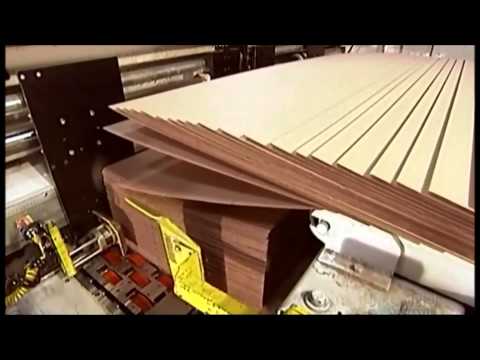
Quality control is an integral part of the manufacturing process. Each board is inspected for strength, size, and design accuracy to ensure it meets strict standards. For intricate designs, flatbed trimmers are used to handle complex perforations with precision. Once approved, the boards are stacked, bundled, and prepared for shipping.
Modern facilities rely heavily on automation to achieve remarkable production speeds. Machines can process up to 8,000 boards per hour and assemble approximately 90 boxes per minute. This high-speed production capability ensures that businesses receive their packaging solutions on time, supporting global supply chains.
A Harmonious Blend of Technology and Sustainability
The production of cardboard boxes exemplifies the seamless integration of advanced technology, sustainable practices, and engineering precision. By transforming recycled paper into versatile packaging, the industry not only meets the growing demand for durable and customizable solutions but also contributes to environmental conservation. From the initial corrugation to the final distribution, every step reflects a commitment to quality and sustainability, making sure that cardboard boxes remain an indispensable part of modern commerce.
Media Credit: International Plastics